Green energy

♻️ Want to Harness Green Energy and Save Big?
👉 Discover the eco breakthrough changing how smart homes power up!

Monday, August 3, 2020

070 - Do Your Impossible - Living A Life with No Regrets


I want to talk about something which I call the impossible task. It is something that each one of us struggles with. We all have something that that we really want to do yet we don't think it is possible, at least not easily possible, and we don't try it. I am here to tell you today, that it is possible and worth trying for.I want to start today talking about a woman name Bronnie Ware. You probably haven't heard about her, but she is an Australian nurse who spent several years working in palliative care, caring for patients in the last 12 weeks of their lives. As humans at the end of our lives we have very clear visions as we look back. Everything comes to the surface. Bronnie would ask them "do you have any regrets, would you do anything over?" One of the top five regrets was:I wish I'd had the courage to live a life true to myself, not the life others expected of me.

Show Notes: www.permaculturevoices.com/70


* This article was originally published here

The Occult, Terrorizing Politics of QAnon - The New Republic

The Occult, Terrorizing Politics of QAnon  The New Republic

* This article was originally published here
Sunday, August 2, 2020

073 - What's a PDC? Part 1 of 2.


Given the amount of confusion that I see on a day to day basis, and the fact that there seems to be a lot of unknowns out there about PDCs, I created this episode to try to answer a lot of the questions that I was getting regarding PDCs.

Now, I am not a PDC instructor and I have only taken one PDC, so I turned to eight well respected PDC instructors (and former PDC students themselves) to get their thoughts on 'What's a PDC.'

Combined these eight instructors have taught hundreds and hundreds of PDCs over the last 30 years and each brings their own twist to the PDC. I asked them all the same questions, and compiled their thoughts into two easily digestible episodes.

At the end of each episode Byron Joel, a PDC instructor himself, and I recap and discuss what we heard, and give our thoughts on PDCs based on our experiences.

To keep things interesting the subject matter was broken up into two pieces...

In Part 1, this episode, we take on the task of answering, What is a PDC? and What isn't a PDC?

In the next episode, Part 2 will answer the questions, What is the value of taking a PDC? and How do I choose and evaluate which PDC is right for me?

Hopefully this show will help answer some questions that you had about PDCs, and indirectly give you a better idea of what permaculture is all about..

Show Notes: permaculturevoices.com/73


* This article was originally published here

August 2 Green Energy News

Headline News:

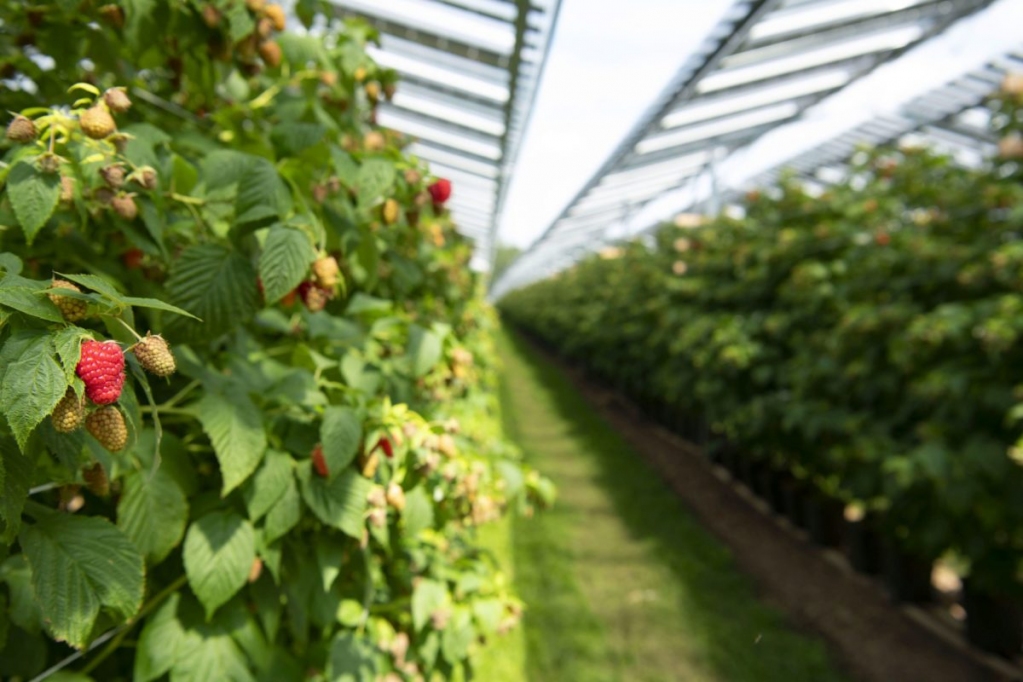
  • “Rasberries Can Grow Under Solar Panels!” • What may have been a crazy idea a few years ago, it turns into a project in the Netherlands. A Dutch farm had 10,250 solar panels deployed across 3.2 hectares of raspberry crops to provide renewable energy for the area and create a more sustainable environment for the raspberries to grow in. [Energy Live News]

Raspberries under solar panels (Image: BayWa re)

  • “Deutsche Bank To Discontinue Lending To Coal Miners” • Deutsche Bank announced that it would discontinue doing business with companies that are most exposed to coal mining by 2025 at the latest. Deutsche Bank also said it would cease financing of new projects in the Arctic and of oil sand projects immediately. [EconoTimes]
  • “WEC Pledges To Be Carbon-Neutral By 2050” • WEC Energy Group, which owns We Energies and Wisconsin Public Service, is pledging to go carbon-neutral by 2050, joining a growing list of companies that are looking to step up their carbon reduction goals. It has set a new goal to reduce carbon emissions 70% in the next decade. [Urban Milwaukee]
  • “Largest Floating Solar Park In Europe Connected To Grid In Netherlands” • The largest floating solar power park outside of China was recently completed in the Netherlands by BayWa re’s Dutch subsidiary GroenLeven. It is expected to provide energy for 7,200 homes. It has 72,000 solar panels. And it was built in just seven weeks. [CleanTechnica]
  • “Realistic Proposals Needed To Deal With Coal’s Decline” • State and local governments in coal-producing areas must plan for what budgeting will be like as revenues from coal severance taxes and income taxes from businesses that depend on coal decline. The problem has been around for years, but it needs to be better addressed. [Huntington Herald Dispatch]

For more news, please visit geoharvey – Daily News about Energy and Climate Change.


* This article was originally published here

074 - What's a PDC? Part 2 of 2.


Given the amount of confusion that I see on a day to day basis, and the fact that there seems to be a lot of unknowns out there about PDCs, I created this episode to try to answer a lot of the questions that I was getting regarding PDCs.

Now, I am not a PDC instructor and I have only taken one PDC, so I turned to eight well respected PDC instructors (names below) to get their thoughts on ‘What’s a PDC?‘

Combined these eight instructors have taught hundreds and hundreds of PDCs over the last 30 years and each brings their own twist to the PDC. I asked them all the same questions and compiled their thoughts into two easily digestible episodes.

At the end of each episode Byron Joel, a PDC instructor himself, joins me and we recap and discuss what we heard, and give our thoughts on PDCs based on our experiences with them.

To keep things interesting the subject matter was broken up into two pieces…

In Part 1, episode 073, we take on the task of answering, What is a PDC? and What isn’t a PDC? In the next episode,

Part 2 we will answer the questions, What is the value of taking a PDC? and How do I choose and evaluate which PDC is right for me?

Hopefully this show will help answer some of the questions that you had about PDCs, and indirectly give you a better idea of what permaculture is all about..

Show Notes: permaculturevoices.com/74


* This article was originally published here

Saturday, August 1, 2020

One-quarter of UK mammals face threat of extinction

While tigers and elephants regally pose for endangered animal posters, many smaller creatures are fading away unnoticed. Now scientists are bringing attention to the dire outlook for less glamorous native U.K. mammals, claiming that one-quarter of them are at imminent risk of extinction. The scientists put 11 mammals on the U.K.’s first official Red List of endangered species . This list categorizes species according to their conservation status, using internationally agreed upon criteria. Related: Right Whales now ranked as critically endangered species “When we draw all the evidence together — about population size and how isolated and fragmented those populations are — we come up with this list of 11 of our 47 native species being threatened imminently,” Fiona Mathews of the Mammal Society told BBC News. “And there are more species that are categorized as ‘near threatened’.” The study concluded that the Scottish wildcat and the greater mouse-eared bat are the U.K.’s most critically endangered mammals. Beaver, red squirrel, water vole and grey long-eared bats ranked as endangered. The vulnerable category included the hedgehog, hazel dormouse, Orkney vole, Serotine bat and Barbastelle bat . “The three categories of threat — critically endangered, endangered and vulnerable — tell you about the probability of the animal becoming extinct within this imminent timeframe,” Mathews said. The U.K. Red List was produced for official nature agencies of England, Wales and Scotland and has been approved by the International Union for the Conservation of Nature ( IUCN ). The biggest reason for plummeting populations is habitat loss. A 2019 report on U.K. wildlife called the country among the most nature-depleted in the world. Many animal species in the U.K. have decreased by an average of 60% since 1970. Invasive species are another factor. Disease-ridden grey squirrels moved in and killed off endangered red squirrels, who lost more than 60% of their range just in the last 13 years. American mink that escaped from fur farms — and who can blame them — ate many native water voles. Scientists lacked enough information to assess the status of some mammals, including the wild boar and whiskered bat. They assigned five animals into the “near threatened” category, meaning they’re slightly too populous to make the Red List: the mountain hare, harvest mouse, lesser white-toothed shrew, Leisler’s bat and Nathusius’ pipistrelle. Via The Guardian and BBC Image via Peter Trimming

Read the original post: 
One-quarter of UK mammals face threat of extinction


* This article was originally published here

075 - Geoff Lawton presents The Permaculture Designers' Manual


This book is about designing sustainable human settlements, an preserving and extending natural systems. It covers aspects of designing and maintaining a cultivated ecology in any climate: the principles of design; design methods; understanding patterns in nature; climatic factor; water; soils; earthworks; techniques and strategies in the difference climatic types; aquaculture; and the social, legal, and economic design of human settlement.

It calls into question not only the current methods of agriculture, but also the very need for a formal food agriculture if wastelands and the excessive lawn culture within towns and cities are devoted to food production and small livestock suited to local needs.

This book is Permaculture, A Designers’ Manual.

And this show is Geoff Lawton covering the whole Permaculture Designers’ Manual in about an hour at PV1 in March 2014.

Show Notes: permaculturevoices.com/75


* This article was originally published here